In recent years, India has become a preferred destination for Kenyan patients seeking advanced medical treatment. With rising healthcare costs and limited availability of specialized care in Kenya, many patients are now looking to India for affordable, high-quality healthcare solutions. The growing partnership between the two nations in healthcare, along with streamlined medical visa processes, has further made it easier for Kenyan citizens to travel to India for treatment.
India is home to some of the world’s best hospitals, internationally accredited healthcare facilities, and highly experienced doctors who specialize in treating complex conditions. Additionally, the cost of treatments in India is often a fraction of what they would be in the West, making it a viable option for many Kenyan families.
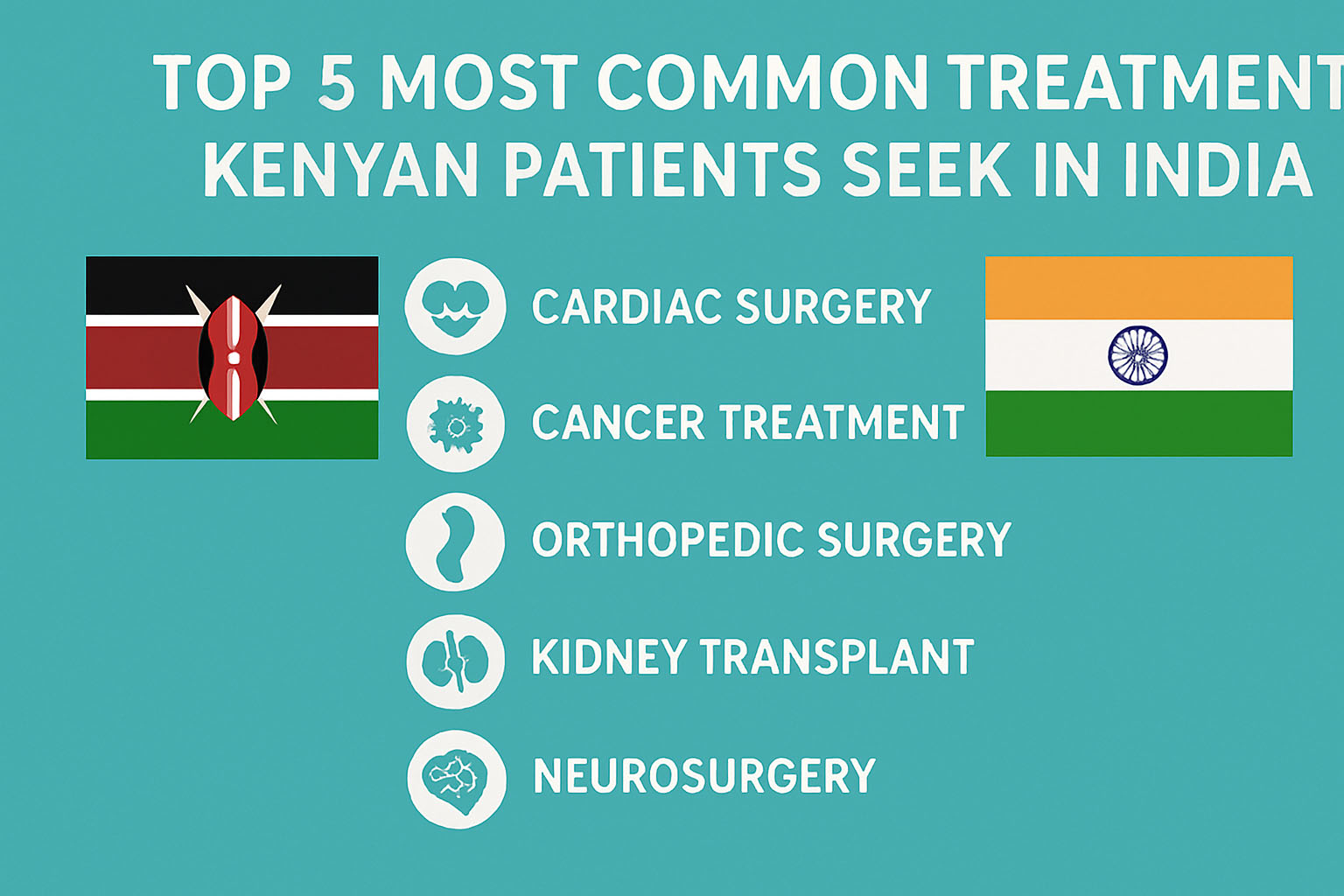
This blog highlights the top 5 most common treatments Kenyan patients seek in India, shedding light on why India has become a healthcare hub for thousands of Kenyans every year.
Cancer has become one of the leading health concerns among Kenyans, and unfortunately, many patients face challenges such as late diagnosis, limited oncology services, and high treatment costs. This has led to an increasing number of Kenyans traveling to India in search of specialized cancer care.
India offers a wide range of cancer treatments, including chemotherapy, radiation therapy, immunotherapy, and advanced surgical oncology. Hospitals like Tata Memorial (Mumbai), Apollo Cancer Institutes (Chennai & Delhi), and Fortis Memorial Research Institute (Gurgaon) are known for their excellence in oncology.
What makes India particularly attractive for cancer patients is the multidisciplinary approach adopted by hospitals. A team of oncologists, surgeons, radiologists, and support staff work together to provide comprehensive care. Moreover, many Indian hospitals are equipped with state-of-the-art diagnostic tools like PET scans, genetic testing, and robotic surgical systems, which enhance treatment accuracy and outcomes.
In addition to top-tier medical care, patients also receive emotional and psychological support through counseling, which is often lacking in many systems back home. With significantly lower costs and shorter waiting times, Indian hospitals make it possible for Kenyan cancer patients to receive timely, effective, and holistic treatment.
Heart disease is another major health issue in Kenya, with increasing cases of hypertension, heart failure, and coronary artery disease being reported across the country. Unfortunately, the availability of advanced cardiac care in Kenya is still limited, and treatment costs can be prohibitively high.
In contrast, India is recognized as a global leader in cardiovascular treatments, especially for international patients. Some of the most sought-after heart procedures include coronary artery bypass grafting (CABG), angioplasty and stenting, valve replacement surgeries, and congenital heart defect repairs.
Hospitals such as Medanta – The Medicity (Gurgaon), Narayana Health (Bangalore), and Max Super Speciality Hospital (Delhi) have renowned cardiac units with some of the best heart surgeons and cardiologists in Asia. These institutions offer world-class diagnostics, minimally invasive surgeries, and comprehensive cardiac rehabilitation programs, ensuring that patients not only receive treatment but also recover well.
Many Kenyan patients are drawn to India not just for affordability but also for the personalized attention and transparent care provided throughout the treatment journey. The success rate of cardiac surgeries in India is among the highest globally, and the use of cutting-edge technology like 3D imaging and robotic surgery adds to the overall efficiency and safety.
Orthopedic problems, especially joint disorders, arthritis, fractures, and spinal issues, are increasingly common in Kenya. Long waiting times and limited orthopedic specialists make it challenging for patients to get timely surgical intervention. As a result, a growing number of Kenyan patients are traveling to India for orthopedic surgeries.
India is a top destination for procedures such as knee replacement, hip replacement, spine surgery, sports injury repair, and advanced trauma care. Surgeons in India are known for their expertise, and many of them are internationally trained. Hospitals are equipped with modern operation theatres, digital imaging systems, and advanced rehabilitation facilities.
What makes India attractive for orthopedic patients is the quick access to surgery, affordable package pricing, and availability of customized implants. For example, a total knee replacement in India can cost 60-70% less than in Western countries, without compromising on the quality of implants or care.
In addition to the surgery itself, Indian hospitals also offer robust post-operative rehabilitation programs. Physiotherapists and mobility experts help patients regain strength and movement in a short period, ensuring a faster return to daily activities.
Many Kenyan patients report high satisfaction with orthopedic treatment in India, noting not only the medical outcomes but also the hospitality and attention to detail provided by the Indian healthcare teams.
Kidney failure is a growing health crisis in Kenya, with increasing numbers of patients requiring dialysis or transplantation. Due to a shortage of transplant centers and qualified nephrologists, many Kenyan patients are forced to seek kidney transplants abroad.
India has emerged as a global leader in kidney transplant surgeries, offering high success rates, advanced infrastructure, and cost-effective treatment options. Top hospitals like Apollo Hospitals, Fortis Healthcare, and Manipal Hospitals have specialized nephrology and urology departments that handle hundreds of transplants every year.
The legal framework for organ transplantation in India is strict but transparent, ensuring ethical and safe donor-recipient procedures. Kenyan patients often travel with a related donor, and the hospital facilitates all legal documentation, compatibility testing, and pre/post-operative care.
Another reason why Kenya patients prefer India is the availability of advanced dialysis facilities, robotic-assisted kidney surgeries, and immunosuppressive therapy. The success rate for kidney transplants in India is comparable to Western countries, but the total cost is often 70-80% less.
Indian hospitals also provide detailed education for patients and families about post-transplant care, medication management, and lifestyle changes—empowering them for long-term health.
Women’s health issues are a major concern in Kenya, especially with limited access to specialized gynecological care in rural and semi-urban regions. Many Kenyan women face challenges such as fibroids, endometriosis, infertility, and high-risk pregnancies, for which local treatment options are either unavailable or too expensive.
India offers a wide range of gynecology and obstetrics treatments that are both affordable and effective. From laparoscopic fibroid removal, hysterectomies, to high-risk pregnancy care, Indian hospitals are well-equipped to handle even the most complex cases.
Hospitals like Cloudnine (Bangalore), Fortis La Femme (Delhi), and Rainbow Hospitals offer state-of-the-art maternity and fertility care, supported by experienced OB-GYNs and reproductive endocrinologists. Treatments are conducted with compassion and cultural sensitivity, ensuring Kenyan women feel safe and respected.
One of the biggest draws for Kenyan patients is the availability of advanced reproductive technologies in India, such as IVF with donor eggs, ICSI, and fertility preservation methods. The success rates are high, and many clinics offer complete packages that include accommodation, medication, and follow-up care.
In addition to clinical excellence, India’s holistic approach to women’s health, including diet plans, mental health support, and post-treatment follow-ups, makes it a preferred destination for gynecological care.
India has become a beacon of hope for many Kenyan patients seeking affordable, advanced, and compassionate medical care. Whether it’s life-saving cancer treatment, complex heart surgery, orthopedic interventions, kidney transplants, or women’s health solutions, India offers a healthcare ecosystem that combines expertise, technology, affordability, and empathy.
At Global Health Trip, we are proud to assist Kenyan patients through every step of their medical journey in India—from doctor appointments and visas to hospital admissions and recovery planning. If you or a loved one is considering medical treatment abroad, India could be the life-changing destination you’ve been searching for.
Reach out to Global Health Trip today and take the first step toward better health.
Written By
Shafiq Ahmad Khan
Founder & CEO
Author
Faster Smarter Medical Tourism in India