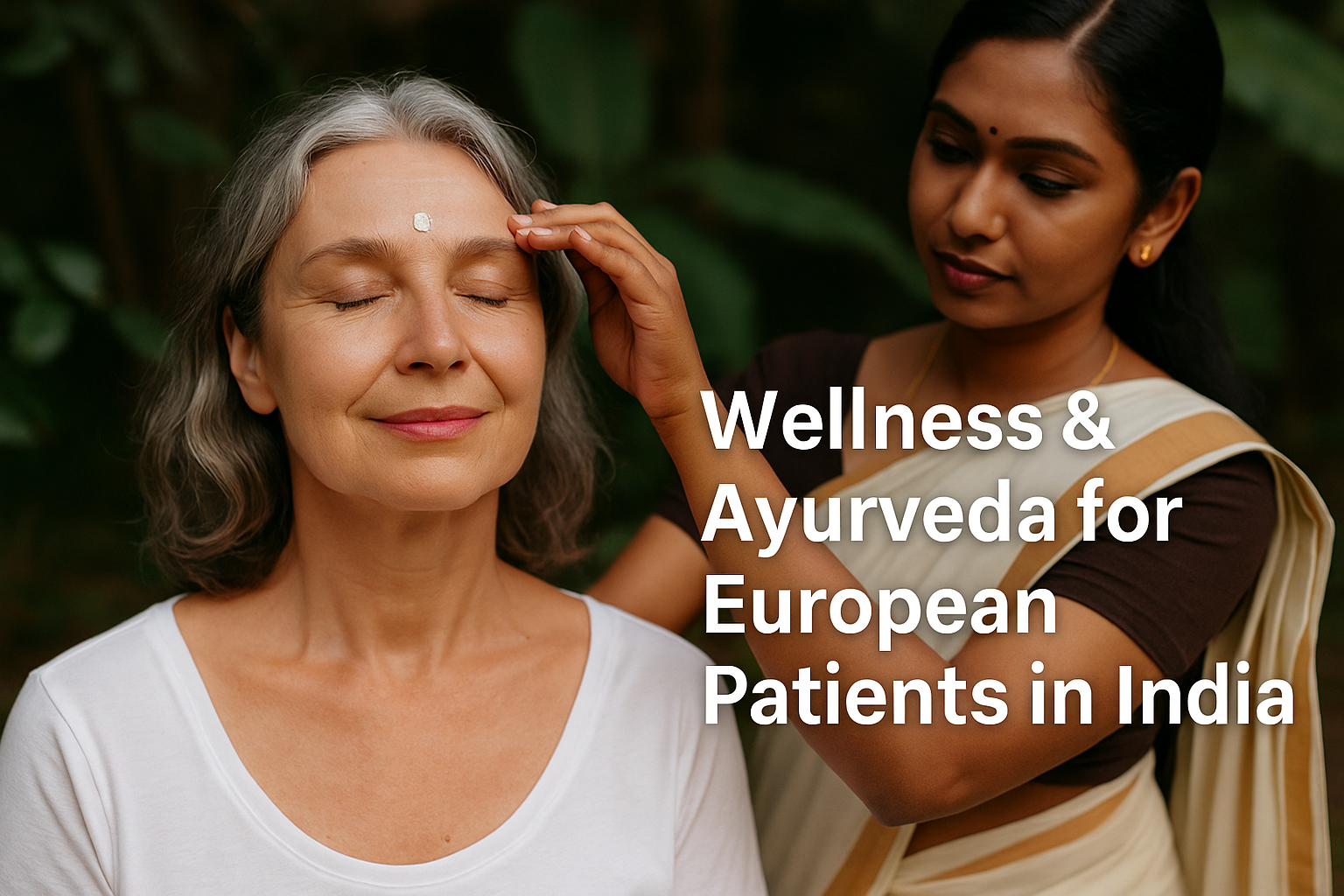
When you think about traveling to India, chances are the first images that come to mind are vibrant colors, ancient temples, spicy food, and yoga by the riverside. But for many Europeans, there’s another reason India has become a life-changing destination: Ayurveda and holistic wellness. Over the last two decades, India has quietly emerged as a global hub for those who want more than just a holiday. They want healing. They want restoration. They want to return home with a lighter body, calmer mind, and renewed spirit.
So, why India? And why Ayurveda?
The answer lies in the fact that Ayurveda is not just a treatment—it’s a philosophy. It’s a 5,000-year-old science that believes every individual is unique, and health is not about suppressing symptoms but about bringing balance back into life. That message resonates deeply with European travelers, especially at a time when stress, burnout, and chronic health conditions are on the rise across the continent.
Today, more and more Europeans—from Germany to France, Italy to the UK—are flying to India for Ayurvedic therapies. They’re not only seeking relief from back pain, arthritis, skin issues, or digestive troubles but also looking for something their modern healthcare systems often miss: personalized care, natural remedies, and deep relaxation.
What makes this movement even more interesting is that Europeans aren’t coming to India just for treatments. They’re coming for an experience. They want the immersive healing environment:
It’s a full reset of lifestyle, not just a prescription.
And let’s not forget the practical appeal. Ayurvedic retreats in India are often far more affordable than equivalent wellness centers in Europe. A two-week rejuvenation package in Kerala, for instance, can cost less than a single week at a spa in Germany. Combine that with India’s skilled practitioners, beautiful natural settings, and warm hospitality, and it’s no wonder European patients keep coming back.
In this blog, we’ll explore:
Ayurveda in India is not just a tradition; it’s becoming a bridge between East and West. For Europeans in search of sustainable healing, India feels like home away from home.
When people say “Ayurveda in India,” the first place that comes to mind is Kerala. It’s not an exaggeration to call Kerala the heart of Ayurveda. Known as “God’s Own Country,” Kerala has not only preserved the authentic traditions of Ayurveda but also turned them into world-class experiences for international wellness seekers.
Why does Kerala stand out? A few simple reasons:
For Europeans, this authenticity is magnetic. Imagine waking up in a beachfront retreat in Kovalam, starting the day with yoga while the Arabian Sea waves crash nearby, then experiencing an Abhyanga massage with warm herbal oils, followed by a freshly prepared sattvic meal. It feels less like treatment and more like a spiritual holiday.
Kerala also offers an important emotional connection. Many European travelers want a break from the fast pace of their cities—Berlin traffic, Paris deadlines, London stress. Kerala’s slower rhythm, combined with holistic healing, gives them exactly that escape. It’s not unusual for Europeans to describe their Kerala Ayurveda trip as “life-changing” or “transformative.”
Popular destinations in Kerala for Ayurvedic wellness include:
Another major draw? Kerala Tourism itself actively promotes Ayurveda as a global brand. Festivals, wellness fairs, and digital campaigns all highlight why this little southern state is the epicenter of holistic healing.
For Europeans looking to combine medical value with vacation value, Kerala ticks all boxes. It’s authentic, affordable, scenic, and deeply rooted in tradition.
Ayurveda is not about “one-size-fits-all.” Instead, treatments are carefully designed after understanding the patient’s dosha balance (Vata, Pitta, Kapha). Europeans find this personalized care very appealing because it feels more tailored than conventional medicine.
Some of the most popular Ayurvedic treatments for European patients include:
Why do these treatments resonate so much with Europeans? Because they address both physical and emotional needs. A patient suffering from arthritis gets relief from pain, but at the same time, the calming environment helps reduce stress. Someone battling insomnia finds Shirodhara more restful than any sleeping pill.
European patients especially admire that Ayurvedic therapies:
This approach gives them a sense of control over their own health—something many say is missing in their fast-paced, pharmaceutical-heavy healthcare systems.
It’s no surprise that many Europeans return year after year for treatments, sometimes even for annual Panchakarma sessions as part of their wellness routine. For them, Ayurveda isn’t just healing; it’s a way of life.
One of the strongest appeals of Ayurveda for Europeans is how effectively it addresses common health concerns that modern medicine often struggles with.
Some of the most frequent issues European patients seek Ayurvedic help for include:
What Europeans appreciate is that Ayurveda doesn’t just “fix” the problem but looks at the root cause. For example:
This holistic approach is refreshing for European patients, who often feel frustrated with treatments that only suppress symptoms.
Another key reason Ayurveda appeals to Europeans is its focus on prevention. Many Europeans visit India not only when they’re sick but as a preventive measure—booking a two-week Panchakarma retreat just to detox and reset before problems even begin.
In simple words, Ayurveda makes health feel achievable, sustainable, and personal again.
Why are Europeans falling in love with Ayurveda? The reasons go beyond medical benefits. It’s about lifestyle, values, and cultural fit.
Here are some major reasons:
There’s also a psychological comfort in Ayurveda. Many Europeans express that hospitals in their countries often feel clinical and impersonal. In contrast, Ayurvedic retreats feel nurturing, almost like being cared for by family.
Interestingly, Ayurveda also aligns well with European values of sustainability and eco-friendliness. The use of natural herbs, plant-based diets, and eco-conscious retreat settings appeal to travelers who care about the planet as much as their health.
Simply put, Ayurveda provides Europeans with something modern healthcare struggles to give: healing with heart.
India has no shortage of Ayurvedic centers, but a few stand out internationally as trusted names among European wellness seekers.
Some of the most popular ones include:
Why do Europeans prefer these centers?
For Europeans, choosing a retreat is not just about treatment but about the entire experience—food, accommodation, therapy, and aftercare. These centers deliver that holistic package.
India’s government recognizes the global appeal of Ayurveda and has actively supported its growth as part of wellness tourism. This is crucial in building trust among international visitors, including Europeans.
Key initiatives include:
This structured government involvement adds credibility. Europeans know they’re not just visiting a spa but a regulated, respected wellness industry.
The government has also invested in campaigns like “Incredible India Wellness” to market the country as a healing destination. Kerala, in particular, receives special attention because it’s considered the Ayurvedic capital.
This support ensures that Ayurveda is not just a traditional practice but a modern, globally recognized healthcare option.
Ayurveda isn’t just good for health; it’s also good for business. The rise of European interest in Indian wellness practices has created a thriving market.
From Germany to Italy, Ayurveda products are now available in local health stores—a ripple effect of people traveling to India and taking their trust in Ayurveda back home.
Looking ahead, the potential is massive. Europeans are spending more on wellness travel, and India offers authenticity at an affordable price. This positions the country as a leader in the global Ayurveda market.
Ayurveda is no longer just India’s heritage; it’s becoming an international industry, with Europe as one of its biggest markets.
Wellness travel is more than a trend—it’s a movement. And at the heart of that movement is Ayurveda, India’s ancient gift to the world. For European patients, India offers something truly special: healing that goes beyond the body and touches the soul.
From Kerala’s serene backwaters to Himalayan luxury retreats, Ayurveda provides a space where Europeans can disconnect from their busy lives and reconnect with themselves. Treatments like Panchakarma, Shirodhara, and Abhyanga are not just therapies; they are experiences that reset health and restore balance.
With government support, trusted centers, and growing international awareness, Ayurveda is not only helping individuals but also boosting India’s global presence and economy.
For Europeans tired of quick fixes and synthetic solutions, Ayurveda in India feels like a return to nature, to authenticity, and to wholeness.
In the end, that’s why they love it: Ayurveda doesn’t just heal—it transforms.

Written By
Shafiq Ahmad Khan
Founder & CEO
Author
Faster Smarter Medical Tourism in India