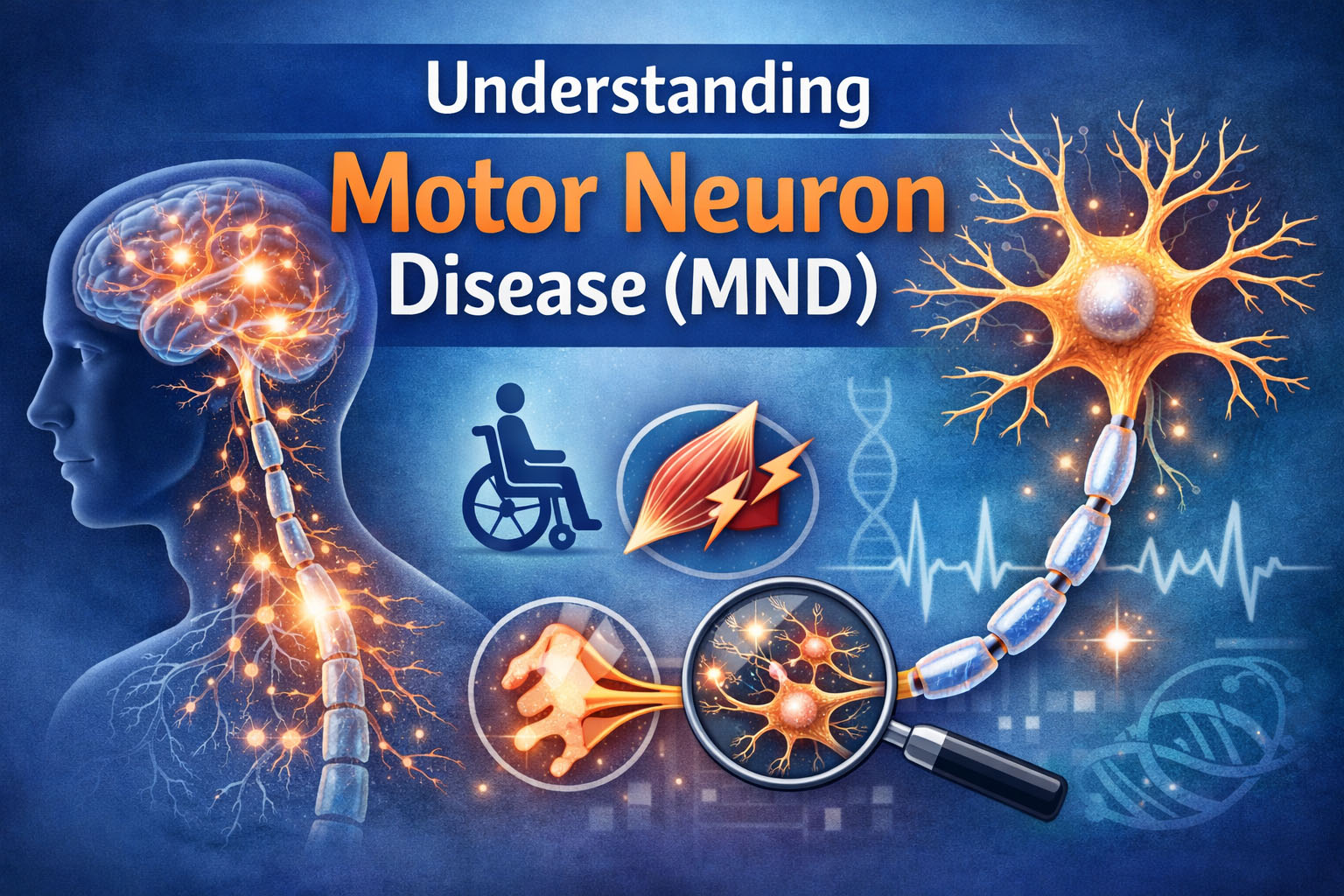
Motor Neuron Disease, often referred to as MND, is a serious neurological condition that gradually affects the nerves responsible for movement. These nerves, called motor neurons, control how we walk, talk, swallow, breathe, and move our hands and legs. When these neurons begin to deteriorate, the muscles they control weaken and eventually stop working.
One of the most widely known forms of MND is Amyotrophic Lateral Sclerosis (ALS). While the disease can feel overwhelming, understanding the early warning signs, causes, treatment options, and costs can help patients and families take timely action.
Let’s break it down in a clear and practical way.
Motor Neuron Disease is a progressive condition that affects the upper and lower motor neurons in the brain and spinal cord. These neurons send signals from the brain to muscles throughout the body. When they stop functioning, muscles weaken, shrink (atrophy), and lose control.
Over time, MND impacts basic activities such as:
It’s important to note that in most cases, MND does not affect intelligence, memory, or awareness. Many patients remain mentally sharp throughout the illness.
Early symptoms of MND can be subtle. Many people dismiss them as fatigue, aging, or minor nerve issues. That’s why awareness matters.
Here are early warning signs to watch for:
This is usually the first symptom. It may start in one hand, one foot, or the tongue.
You may notice:
Small, visible muscle twitches under the skin are common in early stages.
If speech becomes unclear without an obvious reason, it could indicate involvement of bulbar muscles.
Choking on food or liquids more frequently should never be ignored.
Muscle stiffness and painful cramps can also appear early.
If these symptoms persist or worsen, consulting a neurologist is essential.
In most cases, the exact cause of MND remains unknown. However, research suggests multiple contributing factors.
About 5–10% of cases are inherited. Mutations in certain genes may increase risk.
Some studies suggest possible links to:
But none of these are confirmed as direct causes.
Scientists believe MND may involve:
Despite ongoing research, there is still no single confirmed cause.
There is no single test that confirms MND. Diagnosis usually involves:
Diagnosis often takes time because doctors must exclude other diseases with similar symptoms.
Currently, there is no cure for MND. However, treatments aim to slow progression and improve quality of life.
1. Medications
Two commonly used medications for ALS include:
These do not cure the disease but may slow progression.
2. Supportive Therapy
A multidisciplinary approach is critical:
3. Advanced Support
In later stages, patients may require:
The goal is comfort, independence, and dignity.
The cost varies significantly depending on the country, hospital, and stage of disease.
In Western Countries
Treatment can cost:
In India
India offers significantly lower costs compared to Western nations.
Approximate yearly expenses:
Many international patients explore treatment in India due to:
MND is progressive, and its course varies from person to person.
Average survival after diagnosis is 2 to 5 years, but some individuals live much longer. A well-known example is Stephen Hawking, who lived for decades with ALS.
Early diagnosis, proper care, respiratory support, and nutrition management can significantly improve quality of life and sometimes extend survival.ter.
MND affects not just the patient but the entire family. Emotional support, counseling, and support groups play a vital role in coping with:
Palliative care teams help manage both physical and emotional symptoms.
You should consult a neurologist if you experience:
Early evaluation does not always mean the worst. Many conditions mimic MND and are treatable. But ignoring symptoms can delay important care.
Motor Neuron Disease is complex and life-changing. But awareness is power.
Recognizing early signs, seeking timely medical attention, and starting supportive care can make a significant difference. While there is no cure yet, advancements in research continue to bring hope.
If you or someone you know notices unexplained muscle weakness or speech changes, don’t ignore it. Early action matters.

Written By
Shafiq Ahmad Khan
Founder & CEO
Author
Faster Smarter Medical Tourism in India