Heart rhythm disorders, commonly known as arrhythmias, affect millions of people worldwide. These conditions occur when the electrical signals that control the heartbeat become irregular, causing the heart to beat too fast, too slow, or unpredictably. While some arrhythmias are harmless, others can lead to serious complications such as stroke, heart failure, or even sudden cardiac arrest.
Advancements in cardiac care have significantly improved the diagnosis and treatment of these conditions. One of the most important developments is the field of Cardiac Electrophysiology, which focuses on studying and correcting abnormal heart rhythms using advanced technology and minimally invasive procedures.
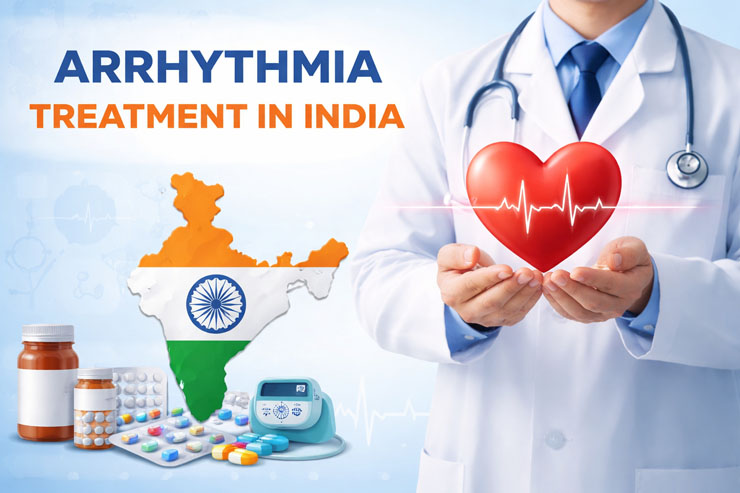
India has become a preferred destination for international patients seeking high-quality arrhythmia treatment. The country offers experienced cardiologists, modern medical infrastructure, and treatment costs that are often significantly lower than those in Western countries. Many hospitals are equipped with advanced electrophysiology labs where specialists diagnose and treat complex heart rhythm disorders with high success rates.
Today we will explore arrhythmia, its causes and symptoms, modern treatment options, and why India is emerging as a trusted destination for patients seeking life-saving heart rhythm treatments.
An arrhythmia occurs when the electrical impulses that coordinate heartbeats malfunction. The heart relies on precise electrical signals to maintain a steady rhythm and ensure efficient blood circulation throughout the body.
There are several types of arrhythmias. Some of the most common include Atrial Fibrillation, which causes a rapid and irregular heartbeat; Bradycardia, where the heart beats too slowly; and Ventricular Tachycardia, a potentially life-threatening condition in which the lower chambers of the heart beat extremely fast.
Arrhythmias may develop due to various factors, including coronary artery disease, high blood pressure, heart valve disorders, congenital heart defects, or damage to the heart muscle after a heart attack. Lifestyle factors such as smoking, excessive alcohol consumption, stress, and obesity can also increase the risk.
Some arrhythmias produce noticeable symptoms, while others may go undetected until a medical examination. Because abnormal heart rhythms can sometimes lead to severe complications, early diagnosis and proper treatment are essential for protecting heart health and preventing long-term damage.
The symptoms of arrhythmia vary depending on the type and severity of the condition. Some individuals may experience mild discomfort, while others may face more serious health risks.
Common symptoms include:
In severe cases, arrhythmias can cause sudden cardiac arrest, which requires immediate medical attention. People experiencing persistent heart rhythm irregularities should consult a cardiologist for proper evaluation.
Doctors use several diagnostic tests to identify arrhythmias, including electrocardiograms (ECG), Holter monitoring, stress tests, and advanced electrophysiology studies. These tests help determine the exact cause of the abnormal rhythm and guide the most effective treatment plan.
Modern cardiology has made remarkable progress in treating arrhythmias through specialized techniques developed in the field of Cardiac Electrophysiology. Electrophysiologists are cardiologists who specialize in diagnosing and treating disorders of the heart’s electrical system.
One of the most important diagnostic procedures is the Electrophysiology Study (EPS). During this test, thin catheters are inserted into the heart through blood vessels to map its electrical activity. This allows doctors to identify the precise area causing abnormal signals.
Once the problem area is located, physicians may perform Catheter Ablation. In this minimally invasive procedure, controlled heat or cold energy is delivered through a catheter to destroy small areas of heart tissue responsible for the abnormal rhythm. Catheter ablation has become one of the most effective treatments for many types of arrhythmias and often eliminates the need for long-term medication.
For patients with dangerous heart rhythms, doctors may recommend implantable devices such as a Pacemaker or an Implantable Cardioverter Defibrillator (ICD). These devices continuously monitor the heart’s rhythm and deliver electrical impulses when needed to maintain a normal heartbeat.
These advanced treatments have dramatically improved survival rates and quality of life for patients with arrhythmia.
India has emerged as a leading destination for cardiac care, attracting thousands of international patients each year. One of the primary reasons is the availability of highly experienced cardiologists and electrophysiologists who perform complex procedures with excellent outcomes.
Many internationally accredited hospitals across major cities are equipped with advanced electrophysiology laboratories and cutting-edge medical technology. Hospitals such as Indraprastha Apollo Hospital, Medanta – The Medicity, Fortis Escorts Heart Institute, Max Hospitals and Artemis Hospital are widely recognized for their expertise in advanced cardiac procedures.
Another major advantage is cost. Arrhythmia treatments in India can be significantly more affordable than in countries like the United States, the United Kingdom, or Australia. Despite the lower cost, patients receive high-quality medical care, modern facilities, and personalized treatment plans. Additionally, many hospitals provide dedicated international patient services, including visa assistance, airport transfers, interpreter services, and customized treatment packages. This comprehensive support system makes the treatment journey smoother and more comfortable for overseas patients.
The cost of arrhythmia treatment in India varies depending on the specific procedure, hospital, and patient’s medical condition. However, it remains considerably more affordable compared to many Western healthcare systems.
Approximate costs include:
In comparison, similar treatments in the United States or Europe may cost three to five times higher. This cost advantage makes India an attractive option for patients seeking high-quality but affordable cardiac care.
Most modern arrhythmia treatments are minimally invasive, which allows patients to recover faster compared to traditional heart surgeries. Procedures like catheter ablation typically require a short hospital stay of one to three days.
After treatment, doctors may recommend lifestyle adjustments to support long-term heart health. These may include maintaining a balanced diet, engaging in regular physical activity, managing stress, avoiding smoking, and controlling conditions such as diabetes or high blood pressure.
Regular follow-up appointments are also important to monitor heart rhythm and ensure the treatment remains effective. Many patients experience significant improvement in their symptoms and overall quality of life after successful treatment.
Arrhythmias can be serious medical conditions, but advances in modern cardiology have made them highly treatable. With the help of advanced technologies in Cardiac Electrophysiology, doctors can accurately diagnose abnormal heart rhythms and treat them using safe, minimally invasive procedures.
India has positioned itself as a global center for advanced cardiac care, offering experienced specialists, state-of-the-art hospitals, and cost-effective treatment options. For international patients seeking reliable and affordable arrhythmia treatment, the country provides a combination of medical expertise and comprehensive patient support.
With early diagnosis and proper care, many people with arrhythmia can lead healthy and active lives, making modern electrophysiology a true life-saving advancement in heart care.

Written By
Shafiq Ahmad Khan
Founder & CEO
Author
Faster Smarter Medical Tourism in India