If you are reading this from outside India, chances are you are doing the same thing most parents and caregivers do at some point. You are trying to make sense of too many opinions.
One person says therapy is everything. Another says surgery is the turning point. Someone else sends you a WhatsApp forward about stem cells. Meanwhile, you are just trying to help your child sit better, walk better, eat better, sleep better. Live easier. And you do not want to waste time or money experimenting.
India comes up a lot in these searches for a simple reason. Treatment can be genuinely good, and it can be far more affordable than many countries. But it is also a big country with a wide range in quality. So this guide is here to help you understand what the real, evidence-based treatment options are, what India does well, where you need to be careful, and how international patients usually plan a trip without losing their mind.
Not medical advice, obviously. But it will give you a clean map.
Cerebral Palsy (CP) is a neurological condition caused by damage to the developing brain, usually before or during birth. It affects muscle tone, movement, posture, and sometimes speech and cognitive abilities.
There are four main types:
The severity can range from mild mobility issues to significant physical limitations. That’s why treatment plans must be personalized. Early diagnosis and early intervention make a major difference in long-term outcomes.
One of the biggest advantages of choosing India is the multidisciplinary care model. Instead of isolated treatments, children receive coordinated care from:
This team-based approach ensures that every aspect of the child’s development is addressed.
Before starting treatment, hospitals conduct detailed assessments including mobility evaluation, muscle tone testing, gait analysis, and speech evaluation. Based on this, doctors create a structured rehabilitation roadmap tailored to the child’s needs.
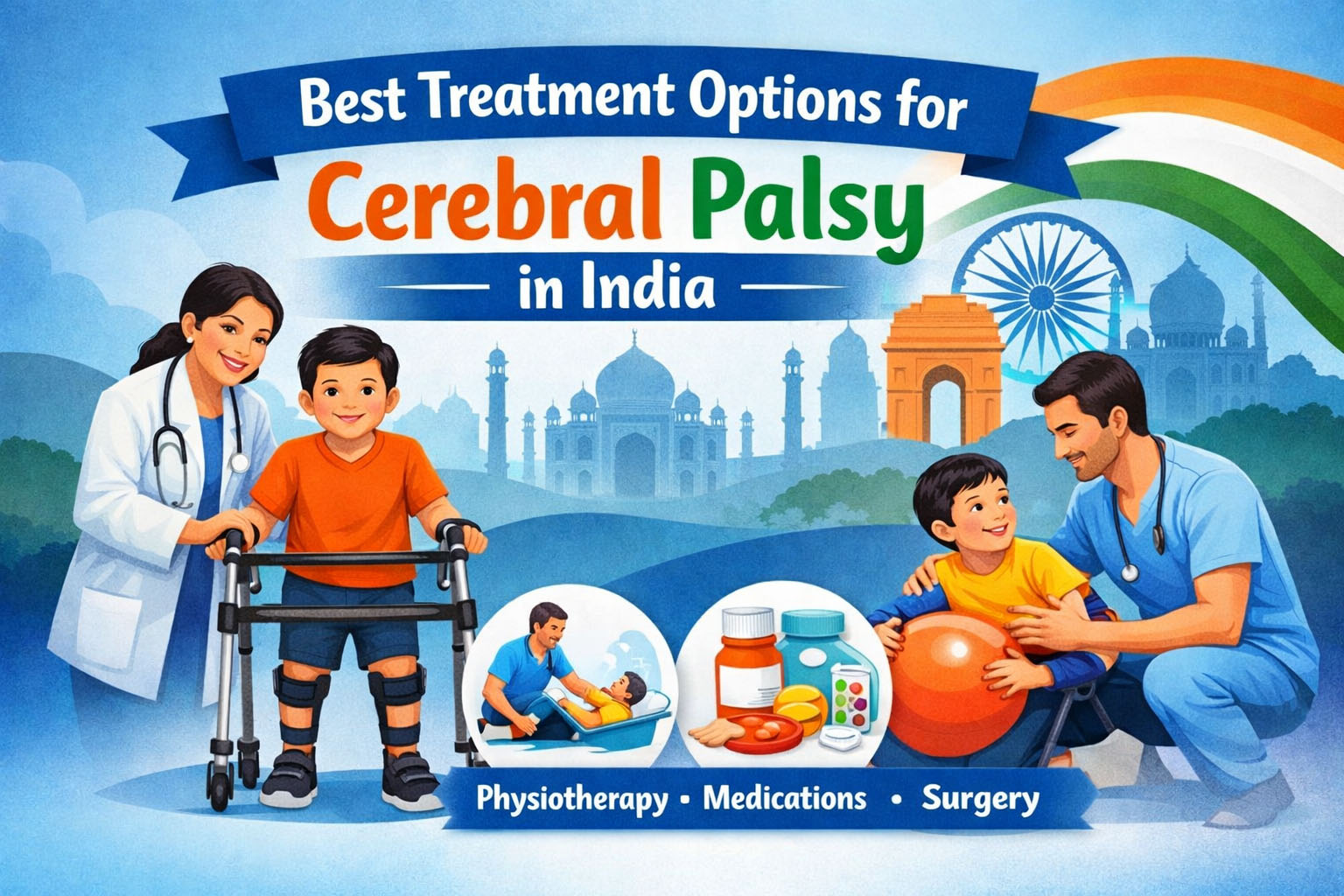
Most children with Cerebral Palsy benefit significantly from non-surgical treatments, especially when started early.
Physiotherapy is the backbone of CP management. It focuses on:
Advanced therapy techniques such as Neurodevelopmental Therapy (NDT) and Constraint-Induced Movement Therapy (CIMT) are available in major Indian centers.
Occupational therapy helps children become more independent in daily activities like eating, dressing, and writing. It improves fine motor skills and hand-eye coordination.
Children with CP may face speech delays or swallowing difficulties. Speech therapy improves communication skills and helps manage feeding issues.
Doctors may prescribe:
These treatments reduce muscle stiffness and improve mobility.
Surgery is considered when conservative treatment does not provide enough improvement.
Procedures such as tendon lengthening and muscle release help correct deformities and improve walking ability.
SDR reduces severe spasticity by cutting specific nerve fibers in the spinal cord. It is suitable for selected patients after careful evaluation.
A baclofen pump delivers medication directly into the spinal fluid, offering better control of muscle stiffness with fewer side effects.
Indian surgeons are experienced in these procedures, with many hospitals handling complex pediatric neurological cases regularly.
Some centers in India also offer:
While stem cell therapy is still being studied globally, families should discuss realistic expectations and scientific evidence with doctors before considering it.
A few practical reasons.
The main downside is also simple. Variability. Some places are excellent and ethical. Some oversell. You need a filter.
Several reputed hospitals provide specialized pediatric neurology and rehabilitation services:
These hospitals have international patient departments that assist with medical visas, interpreters, airport transfers, and accommodation arrangements.
Cost is one of the biggest reasons families choose India.
Physiotherapy sessions may range between $15 to $40 per session depending on the hospital. Long-term therapy packages are often available at discounted rates.
The same procedures in the US or UK may cost 3 to 5 times more. Families can often save 60–70 percent without compromising on quality.
Cerebral Palsy cannot be cured, but symptoms can be significantly improved. With consistent therapy and proper management:
The key is early intervention and long-term commitment.
India has emerged as a strong destination for Cerebral Palsy treatment because it offers comprehensive care at affordable costs. From advanced surgeries to intensive rehabilitation programs, families can access world-class medical expertise without the financial burden seen in many Western countries.
For international patients, the right planning, choosing the right hospital, and committing to long-term therapy can make a meaningful difference in a child’s quality of life.
Written By
Shafiq Ahmad Khan
Founder & CEO
Author
Faster Smarter Medical Tourism in India