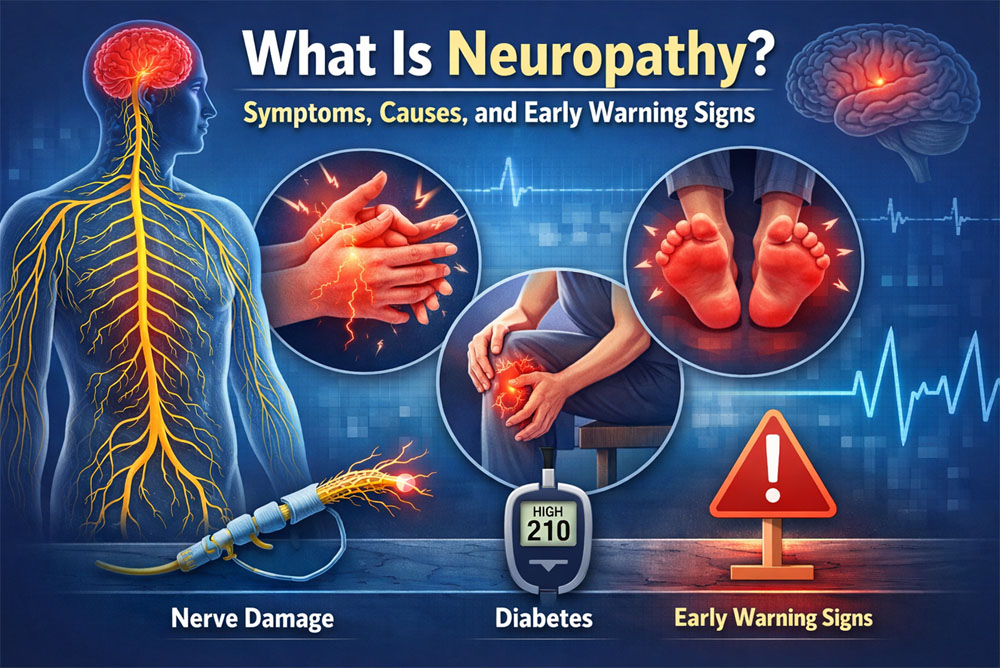
Neuropathy is one of those medical terms that sounds complicated, but the experience itself is something many people recognize instantly. Tingling feet. Burning pain. Numb fingers. Weakness that seems to come out of nowhere. If any of this sounds familiar, you’re not alone.
Millions of people around the world live with neuropathy, often without knowing what it is or why it’s happening. The earlier you understand it, the better your chances of slowing it down, managing symptoms, and protecting your nerves.
Neuropathy means nerve damage. That’s it. No mystery.
Your nerves are like electrical wires that carry messages between your brain, spinal cord, and the rest of your body. These messages tell you when something hurts, when something is hot or cold, and how to move your muscles.
When those nerves get damaged, the messages don’t travel correctly. They may:
That’s when symptoms start.
People often describe neuropathy as:
Neuropathy isn’t a single disease. It’s a condition caused by something else, which is why understanding the cause matters so much.
To understand neuropathy, it helps to know how nerves normally work.
Your nervous system has three main jobs:
Healthy nerves send signals smoothly and quickly. Damaged nerves don’t.
When neuropathy develops, several things can go wrong:
The result is miscommunication. Your brain may receive pain signals when nothing is wrong, or fail to receive important signals at all.
That’s why neuropathy symptoms can feel confusing and unpredictable.
Neuropathy is usually grouped by which nerves are affected.
This is the most common type. It affects nerves in the:
Symptoms usually start in the toes or fingers and slowly move upward. This “stocking and glove” pattern is a classic sign.
This affects nerves that control automatic body functions, such as:
These symptoms are often missed or blamed on other conditions.
This affects a single nerve or nerve group, often due to:
Examples include carpal tunnel syndrome or facial nerve palsy.
Neuropathy doesn’t always start dramatically. In many cases, it creeps in quietly.
These affect how you feel sensations.
People often report:
Symptoms are often worse at night.
When motor nerves are affected, you may notice:
These are easy to miss but important:
Early signs are often subtle, which is why people ignore them.
Watch for:
Neuropathy often starts small. Catching it early can make a big difference.
This is the number one cause worldwide. High blood sugar damages nerves over time, even before diabetes is officially diagnosed.
Especially:
These are often overlooked and easily treatable.
Long-term alcohol use and exposure to heavy metals or industrial chemicals can damage nerves.
Some drugs, including certain chemotherapy agents, can cause neuropathy as a side effect.
Conditions like lupus, rheumatoid arthritis, HIV, and Lyme disease can affect nerves.
Compressed nerves from herniated discs, repetitive motion, or trauma can lead to localized neuropathy.
You may be at higher risk if you:
Knowing your risk helps you act sooner, not later.
Diagnosis usually includes:
Doctors focus on identifying the cause, not just treating symptoms.
Seek medical attention immediately if you have:
These may signal something more serious.
While waiting for diagnosis:
Small steps early can slow progression.
Neuropathy is common, manageable, and often treatable when caught early. The key is paying attention to your body.
Tingling, numbness, burning, or weakness are not things to ignore. They’re signals. And your nerves are asking for help.
If you listen early, you give yourself the best chance for relief, recovery, and long-term nerve health.

Written By
Shafiq Ahmad Khan
Founder & CEO
Author
Faster Smarter Medical Tourism in India